Elevo
Boosting physiotherapy engagement by 42% through a hybrid mobile + VR experience - Case Study

The clinic ends at the door. Everything after that, the exercises, the doubt, the quiet quitting, happens alone. Elevo bridges that gap with a mobile + VR rehab system built around one insight: confidence, not reminders, is what keeps patients going.

project type
role
timeline
tools used

The Context

Between 50–65% of physiotherapy patients don't follow their prescribed home exercise programmes. The common assumption is that it's a motivation problem, fix it with reminders and streaks. But when I started digging, the real picture was more uncomfortable than that.

Physiotherapists have the inverse problem: they're working blind between sessions, with no data to understand why a patient regressed, no way to course-correct until the next appointment, and no visibility into how exercises are actually being performed at home.
Existing tools split into two camps that serve neither group well: clinical-grade platforms designed for clinicians (not patients), and wellness apps that treat physiotherapy like a gym session. The middle space - guided, clinical, and usable at home, was empty.
The Design Bet





PROCESS
Here's how the project actually unfolded, from the first research conversations to the final prototype evaluation.

01 - DISCOVER

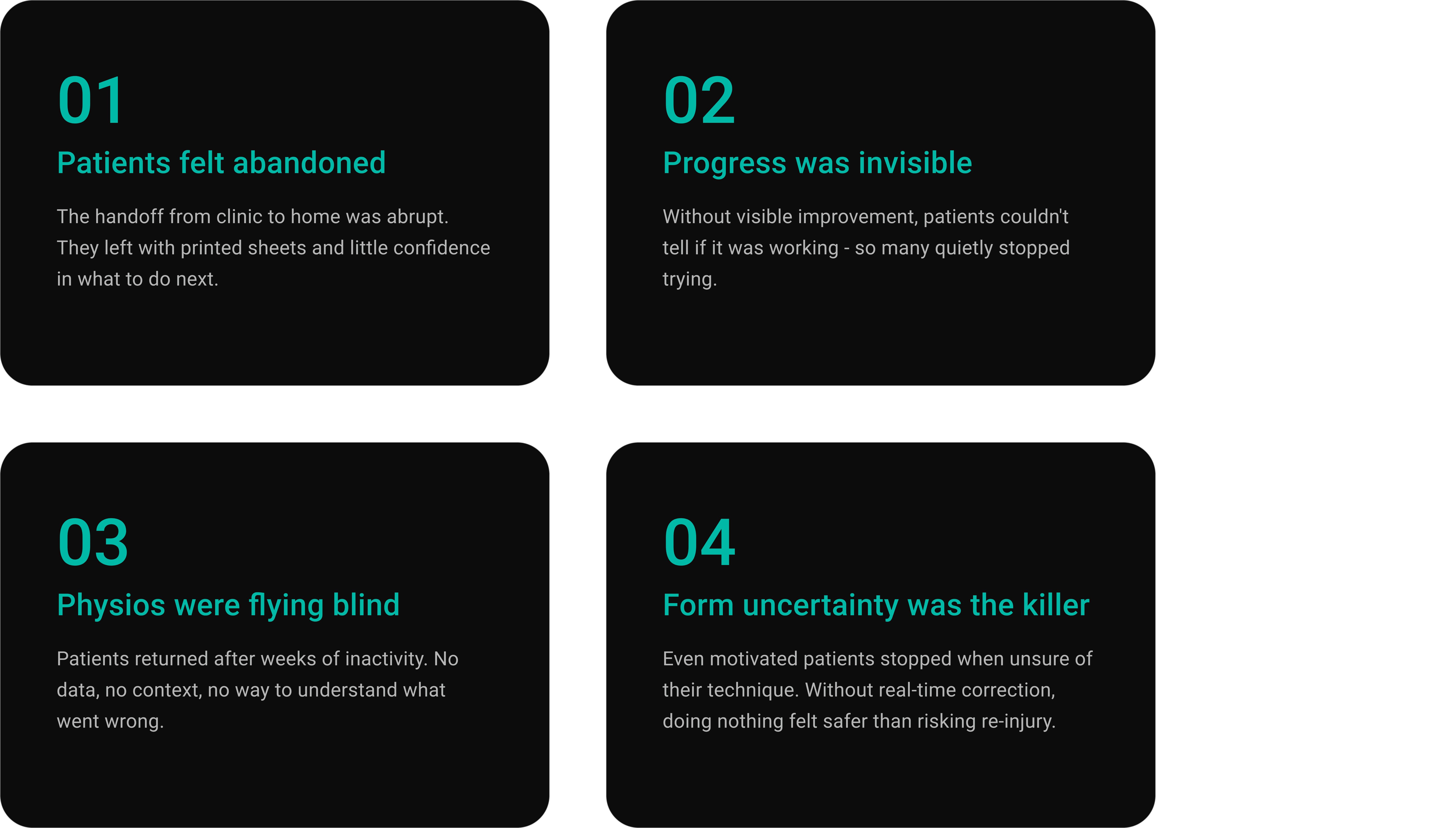
8 semi-structured interviews. 4 patients, 4 physio students. One pattern came back every single time.

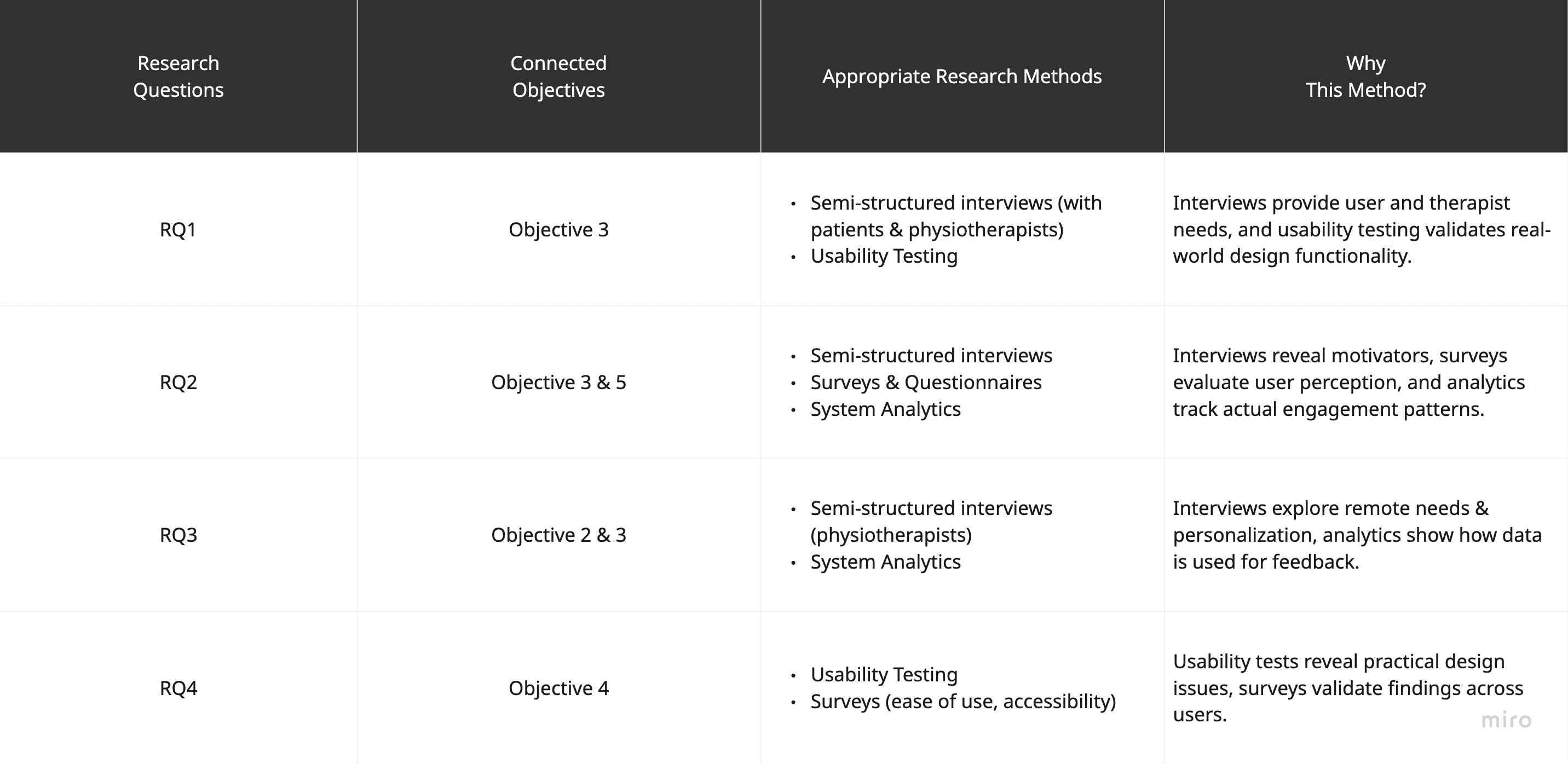
To ensure each research question was addressed systematically, mapped them to specific research methods. This helped align the objectives with appropriate qualitative and quantitative techniques, ensuring that insights were both exploratory and measurable.
02 - DEFINE

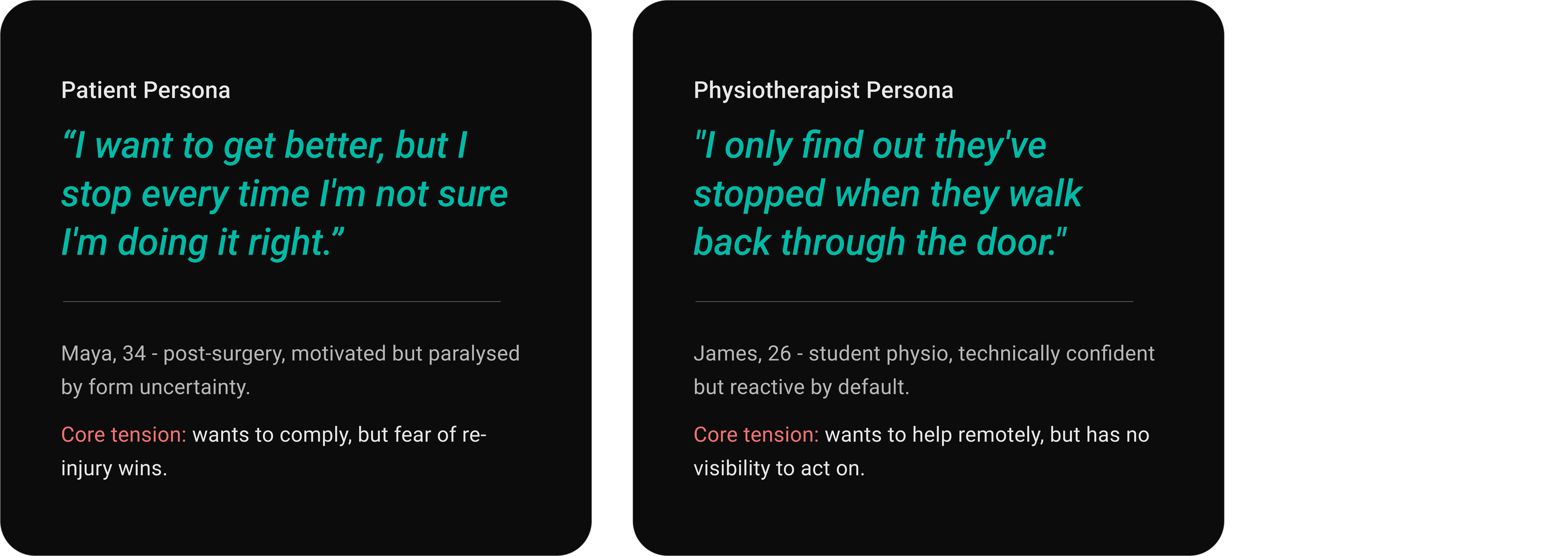
The research mapped to two personas with entirely different failure modes. So each platform got one clear job.
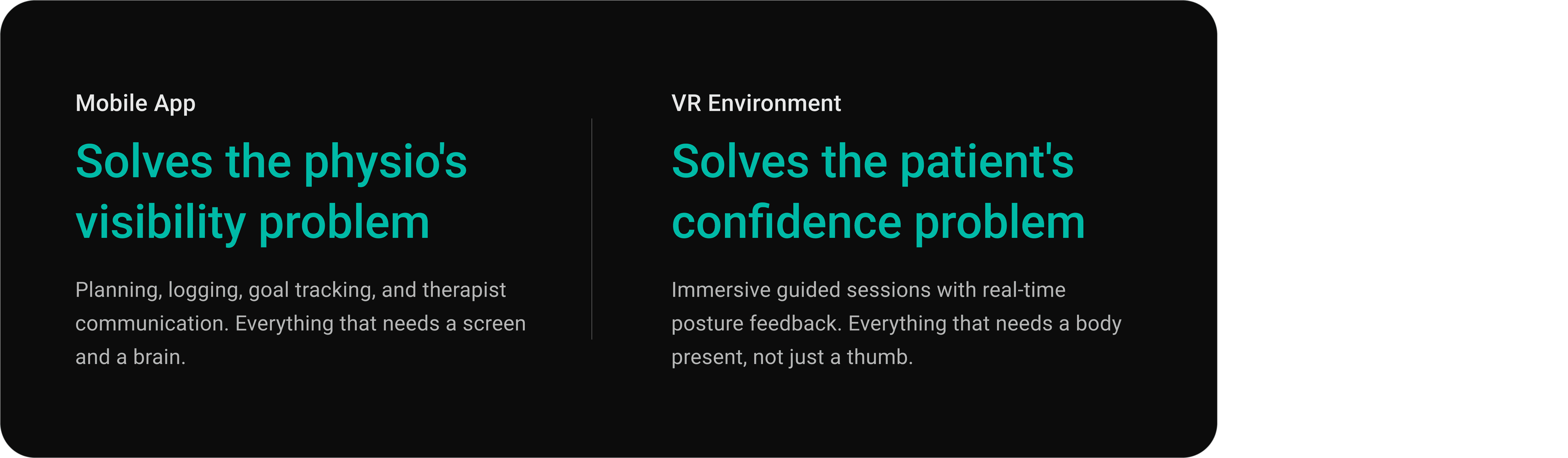
Every feature earned its place

What the priority matrix actually decided -

03 - DEVELOP

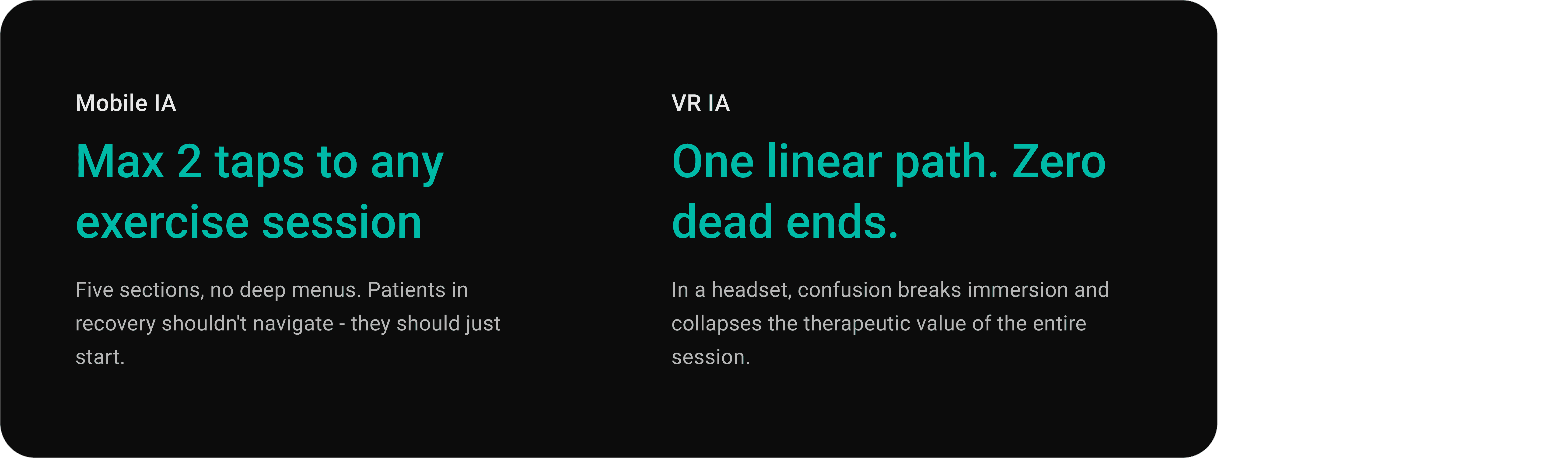
Journey mapping revealed the natural rhythm: plan on mobile → perform in VR → review back on mobile. Once that was clear, the IA and flow wrote themselves.


What lo-fi testing changed :
My first exercise flow used a card swipe to advance reps. Users kept accidentally skipping mid-exercise. Switched to a time-locked step with an explicit confirm, fixed before a single hi-fi pixel was committed.
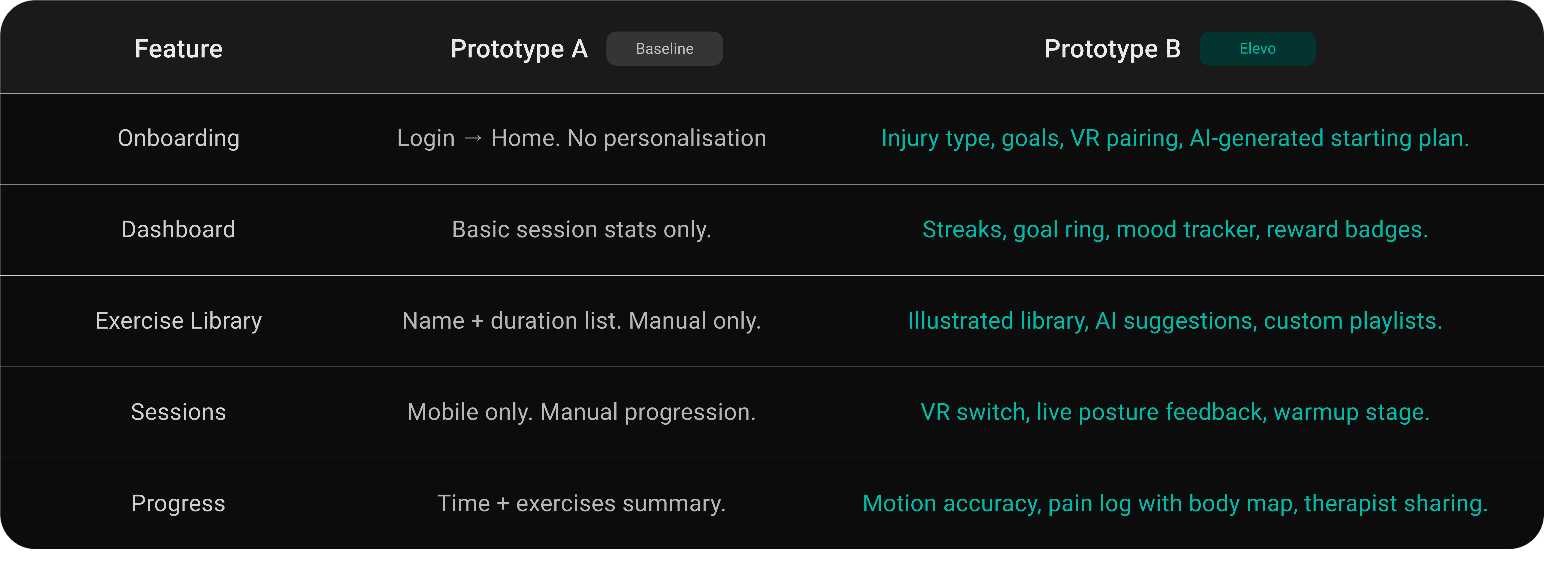
To make testing meaningful, I built two prototypes with identical visual design, so any difference in results could only come from functionality.
04 - DELIVER

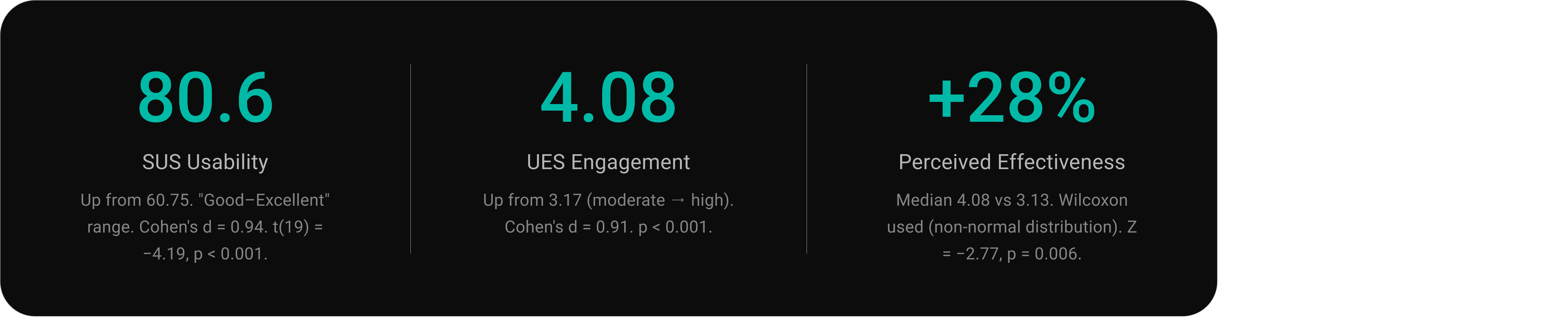
Within-subjects A/B test. 20 participants. Paired t-tests, Wilcoxon, and effect sizes run in SPSS. Not self-reported satisfaction, actual statistical evidence.
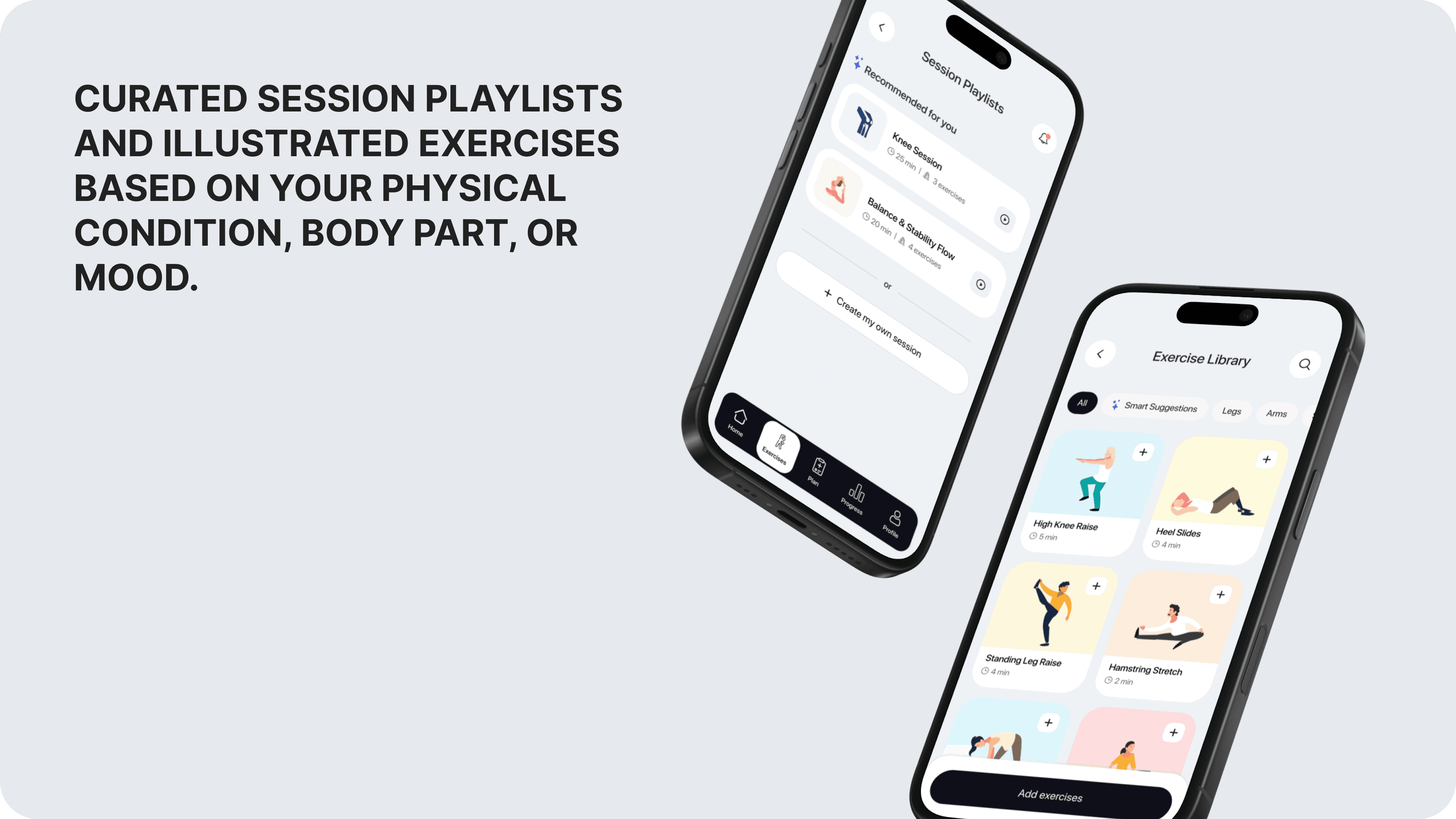
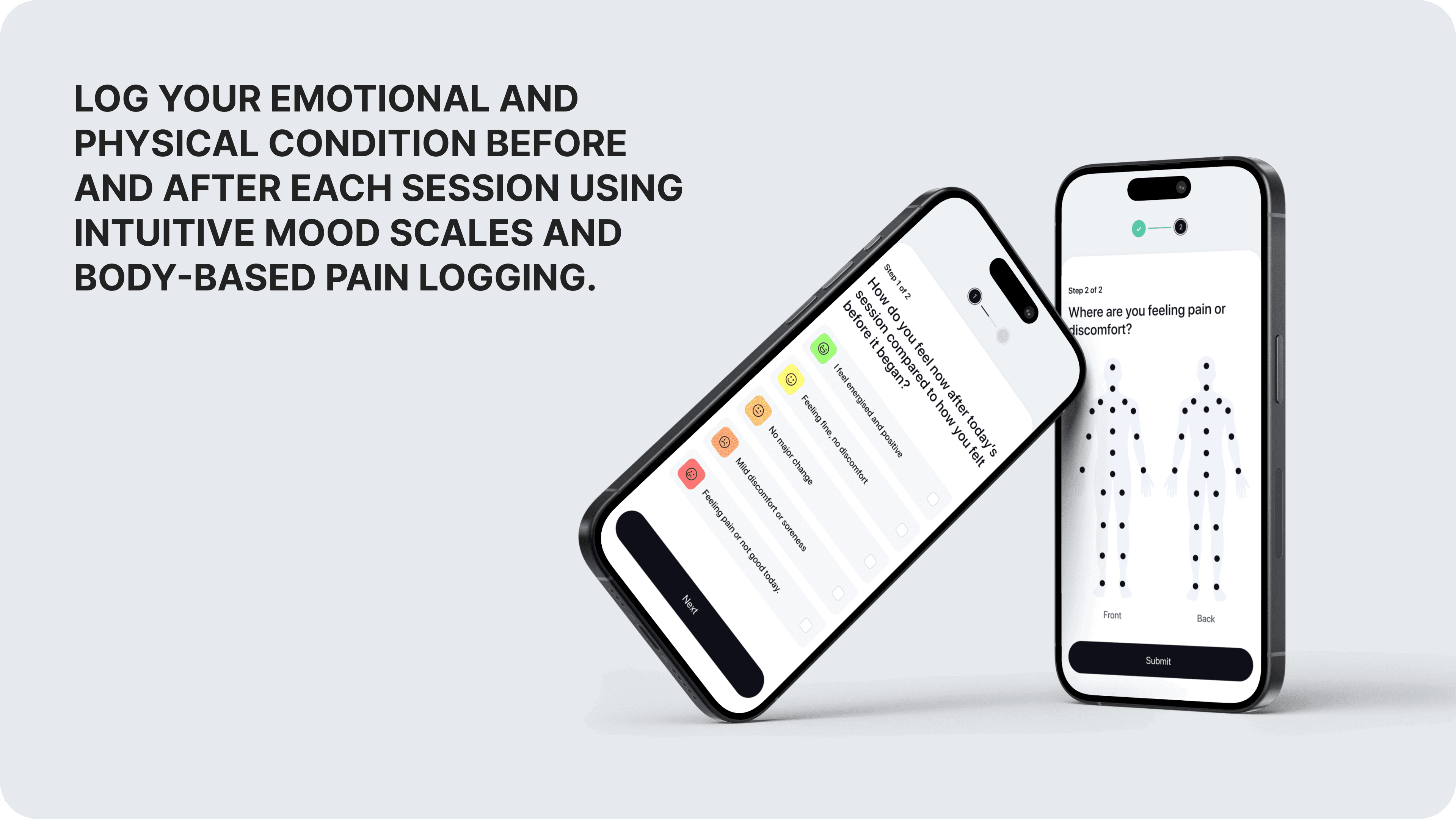
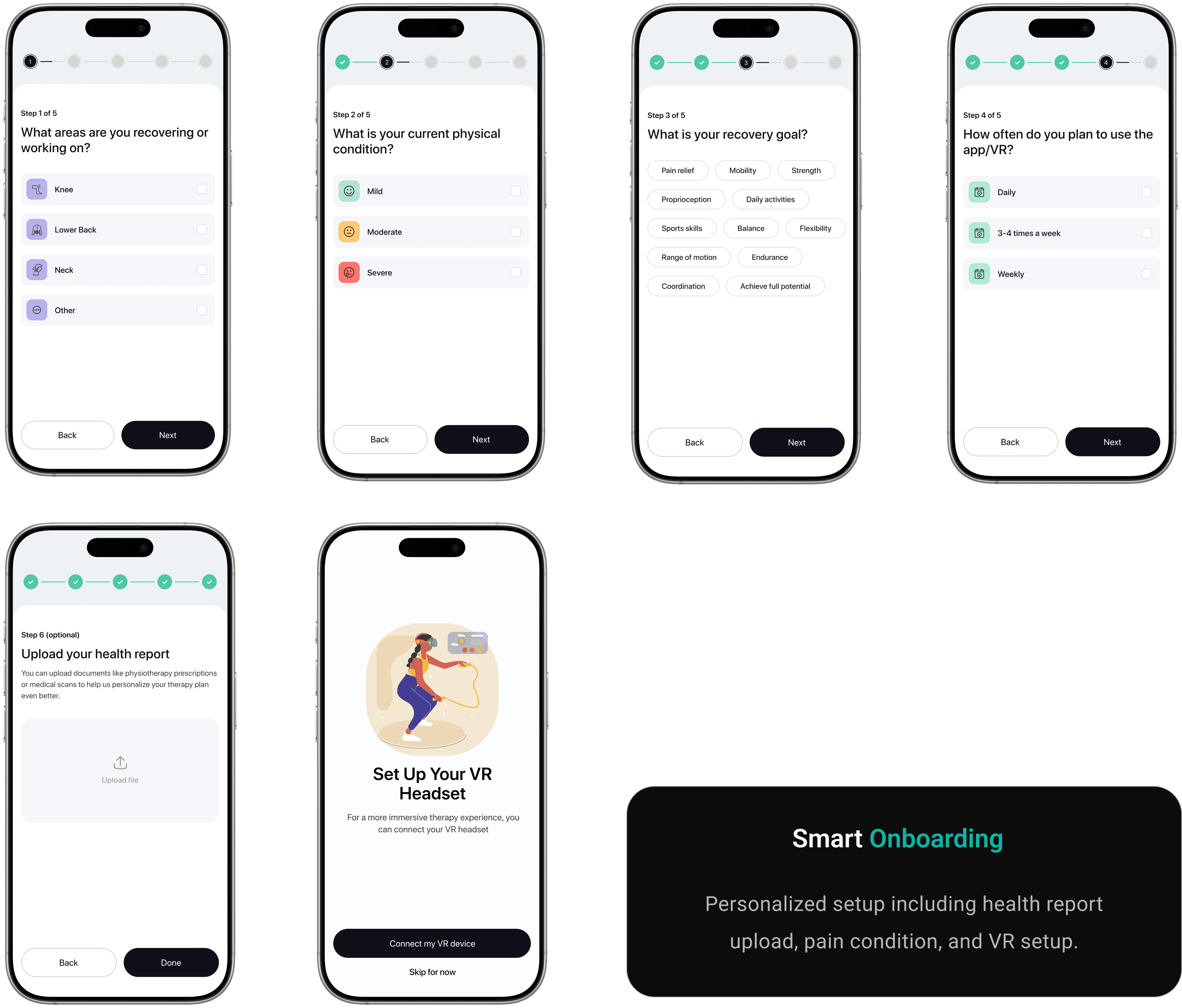
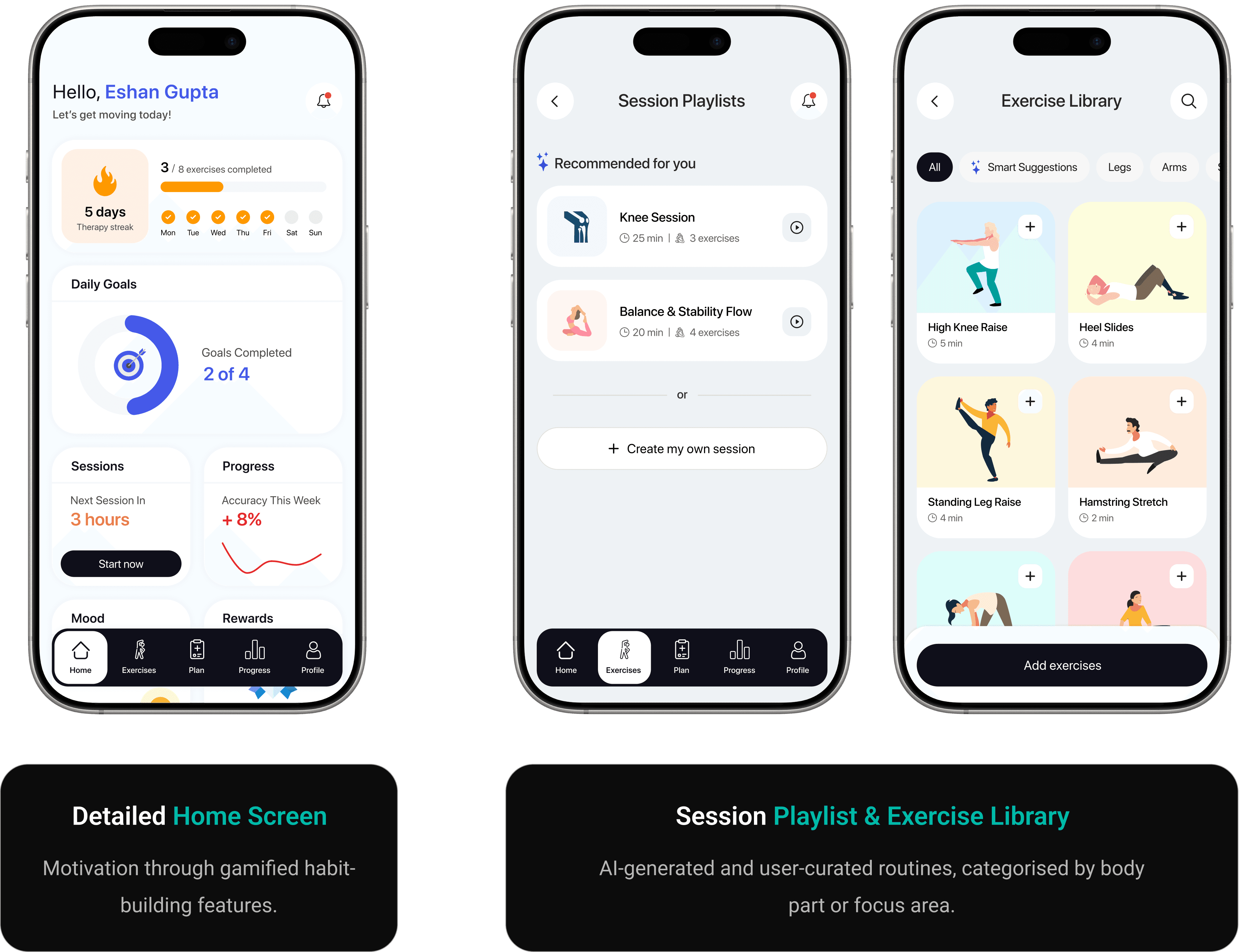
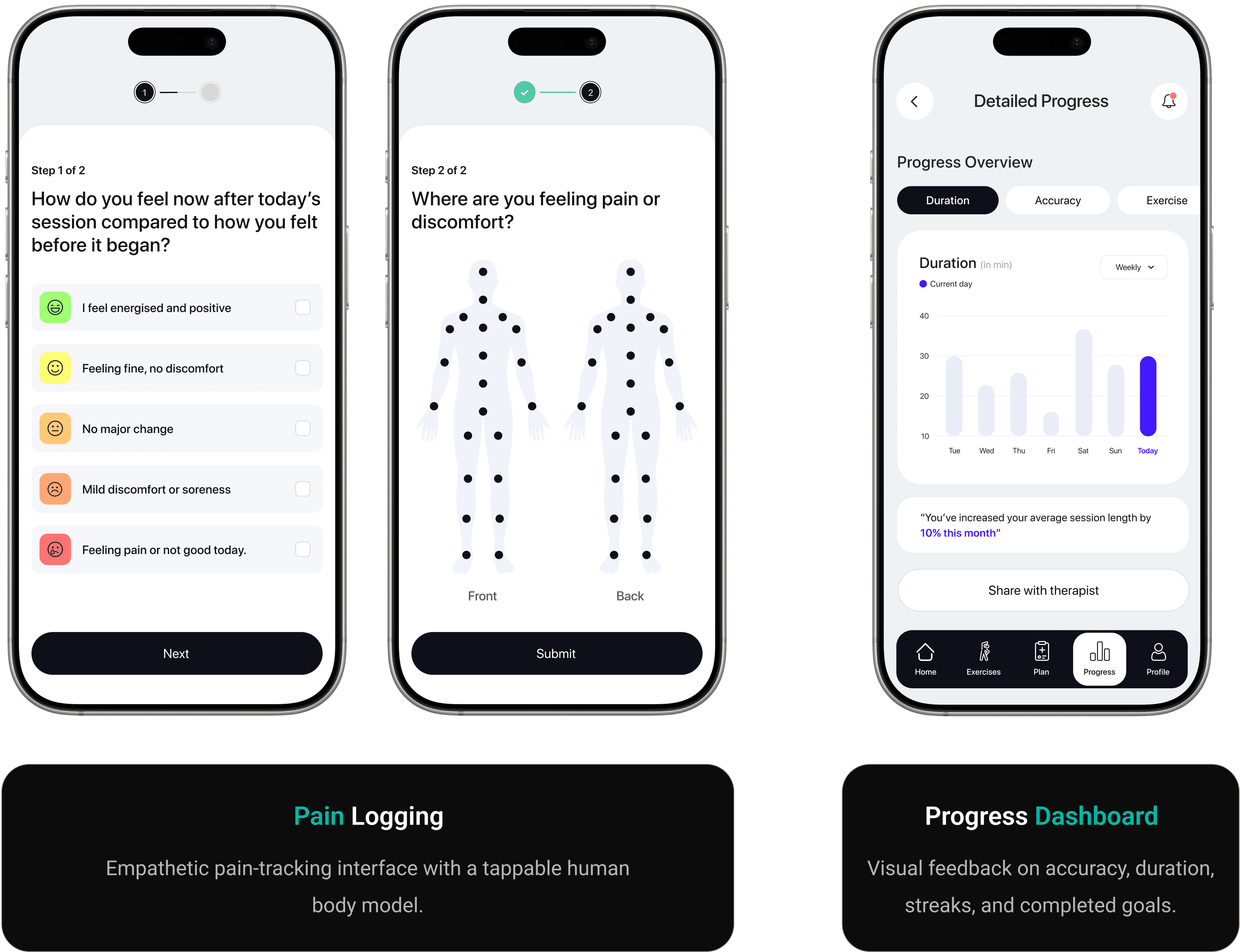
Mobile App
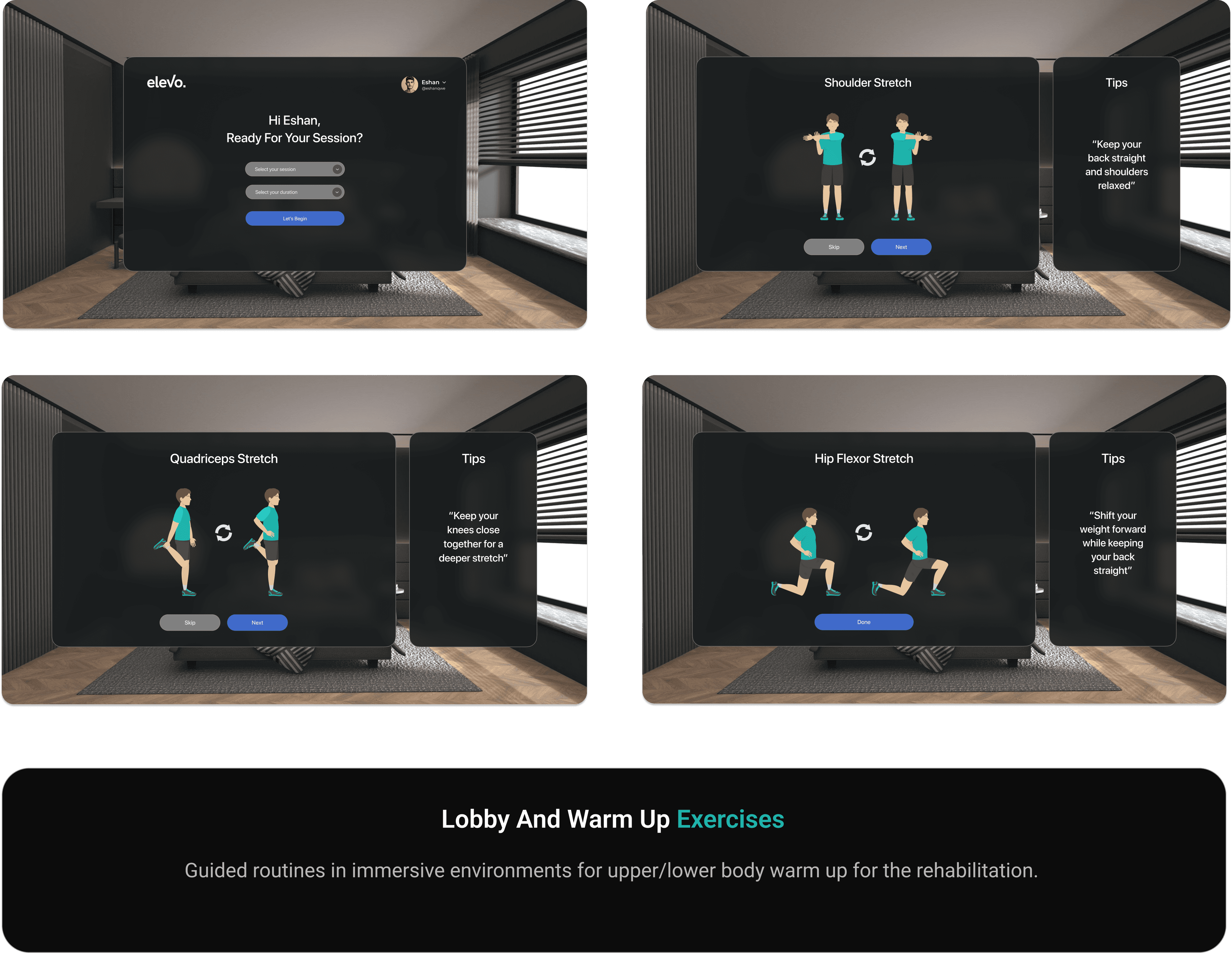
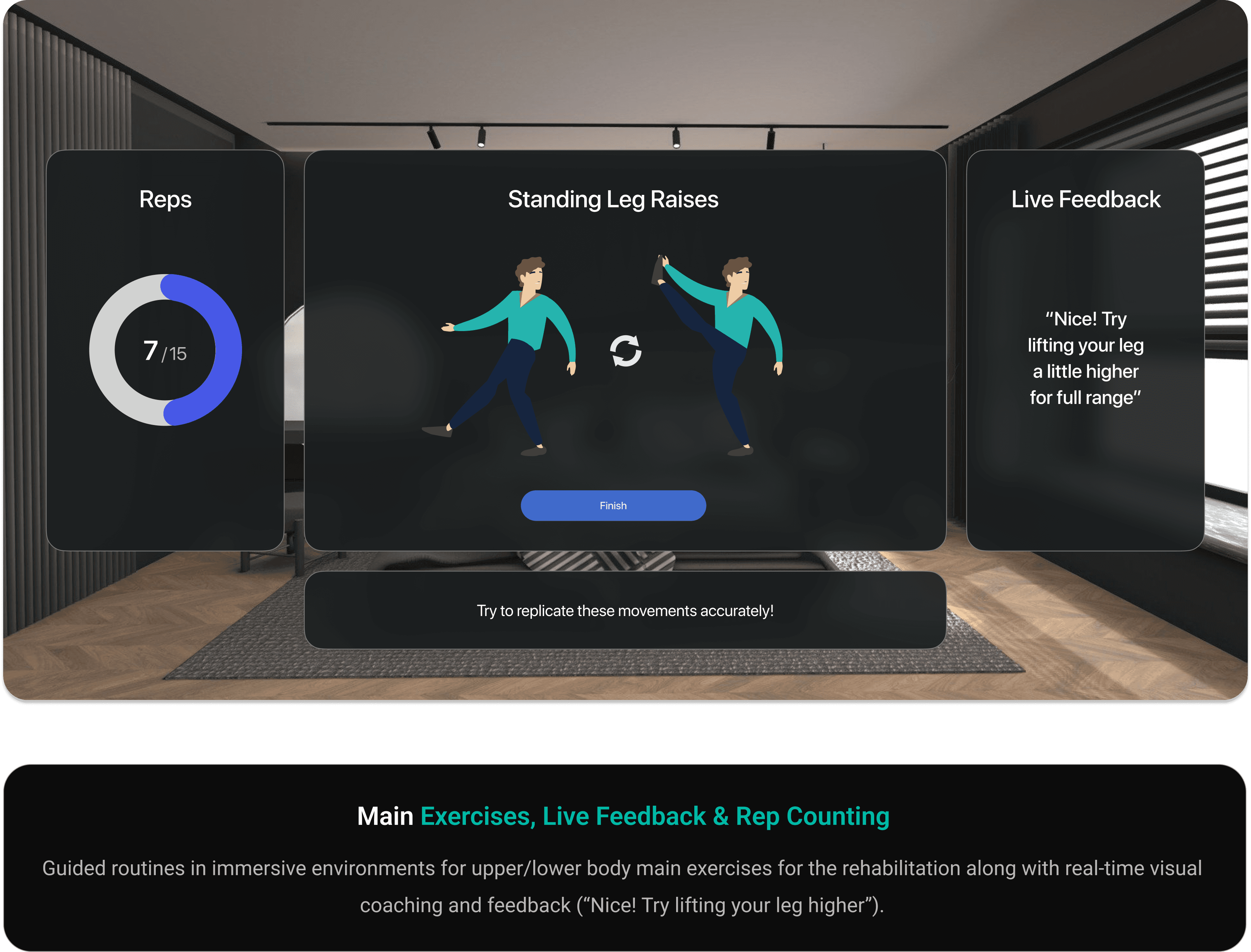
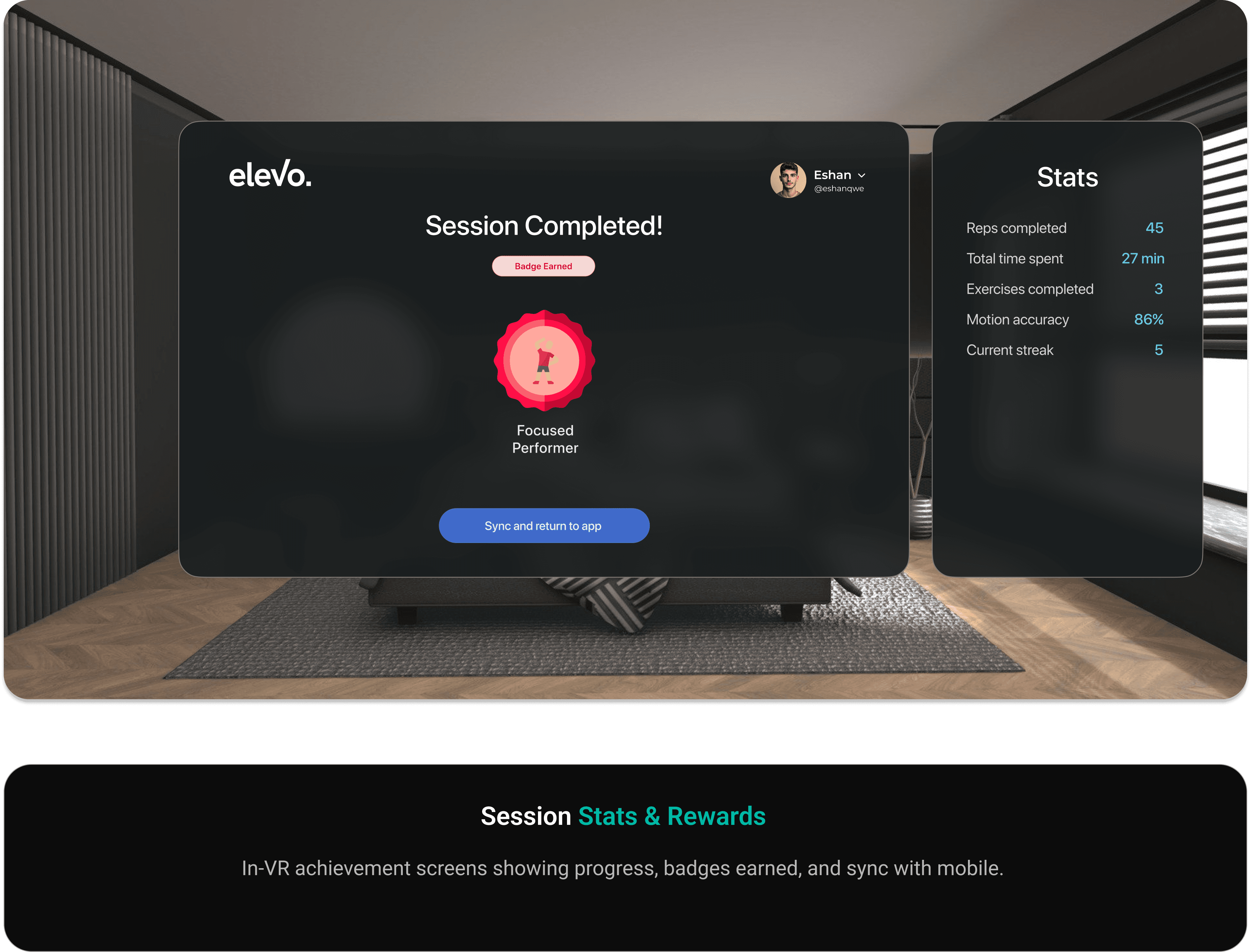
VR Environment
Reflection

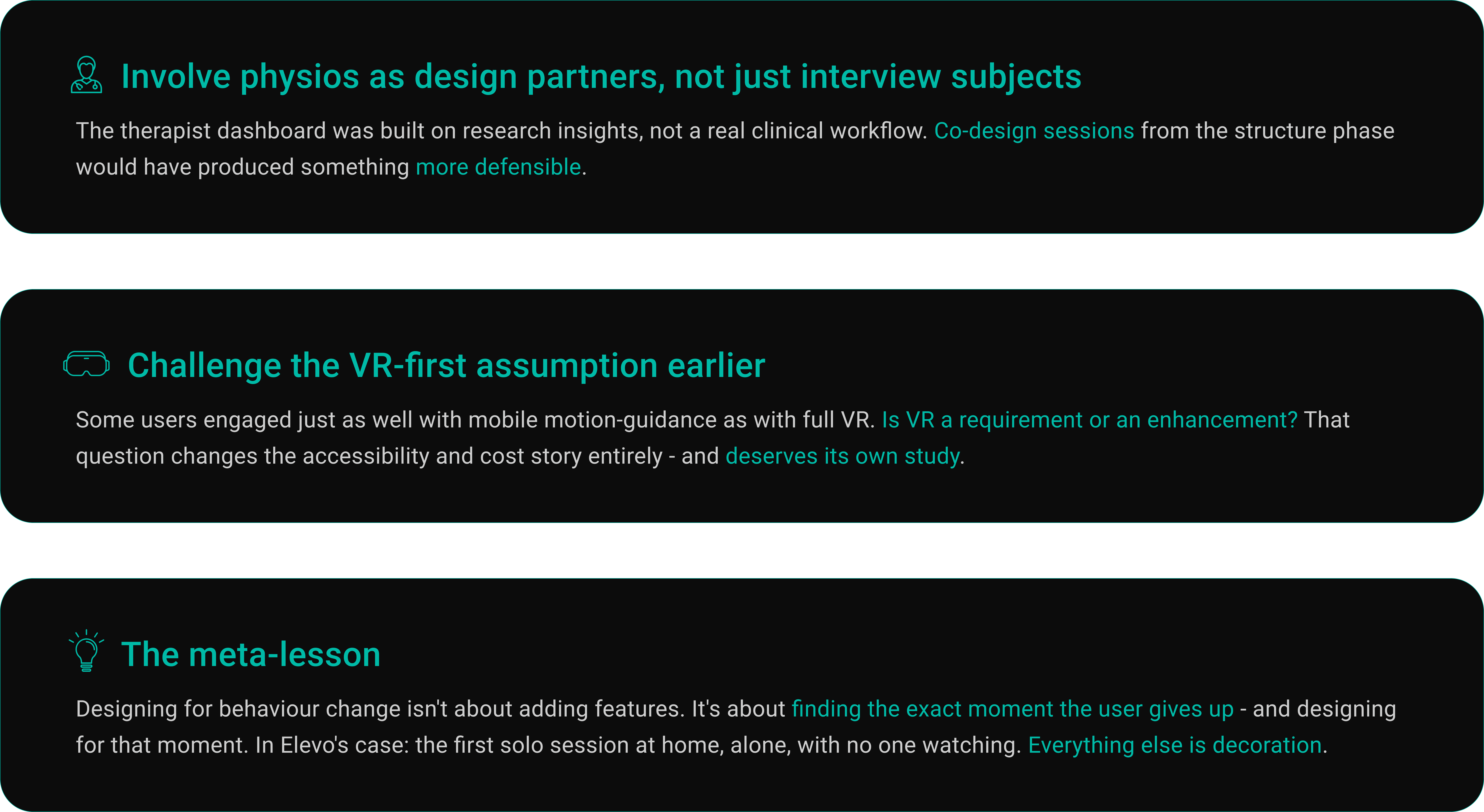
The data held up. Three things I'd change if starting again.